For Capital Equipment & Machine Builders

Ship machine programs on time.

BlackOrbit is the coordination layer for capital equipment builders. Every change order coordinated. Every long-lead item tracked. Every FAT passed the first time. One shared program view, from order accepted to site acceptance.

Design partner cohort · 3 of 5 spots remaining
ETO-native
Multi-discipline BOM
Live in 1 day
Engineer-to-Order
FAT / SAT
Long-Lead Items
Change Orders
Multi-Discipline BOM
Controls & Software
CE Marking
UL
Commissioning
Documentation Pack
Supplier Coordination
Site Acceptance
Spares & Handover
Engineer-to-Order
FAT / SAT
Long-Lead Items
Change Orders
Multi-Discipline BOM
Controls & Software
CE Marking
UL
Commissioning
Documentation Pack
Supplier Coordination
Site Acceptance
Spares & Handover

Your machines don't ship late because of engineering. They ship late because change orders, long-lead items, and three disciplines coordinate through email and Excel.

50%+
Growth in time spent coordinating, not building*
Time spent in meetings, on email, and on collaboration has grown by half over the past two decades. Most managers now spend the majority of their workweek on it, not on skilled work.
3 yrs
Average schedule slip on the largest engineering programs
Delivery time on the largest U.S. weapon-system programs climbed from 8 to 11 years — for coordination reasons more than engineering ones. Machine builders live the same pattern at smaller scale: quiet suppliers and unmanaged changes compound into a slipped FAT.
65%+
Of manufacturers say program talent is their #1 business challenge
Counting on hiring won't be enough. Your program managers and process engineers need leverage, quickly.

* Cross, Rebele & Grant, "Collaborative Overload" — Harvard Business Review (Jan–Feb 2016). hbr.org/2016/01/collaborative-overload

U.S. GAO, Weapon Systems Annual Assessment (GAO-24-106831, 2024). gao.gov/products/gao-24-106831

National Association of Manufacturers, Manufacturers' Outlook Survey. Talent has ranked #1 for 16 consecutive quarters. nam.org/manufacturers-outlook-survey

Every machine you build is a program. The program is where margin is won or lost.

Change orders

The cascade, before you commit.

Your customer changes scope mid-build. The cascade across mechanical, electrical, and software — work packages, gates, dates — is mapped before you commit a new delivery date.

Long-lead items

Slips surfaced the day they happen.

Motors, gearboxes, PLCs tracked against the build plan. When a supplier goes quiet, you hear about it that day — not at the FAT.

One program

Three disciplines, one machine.

Mechanical, electrical, and controls/software converge on the same machine. One shared view of who is blocked, who is waiting, and what changed — across all three.

FAT / SAT

Readiness gates, native.

FAT and SAT readiness checklists built in. Punch lists, documentation packs, and sign-offs tracked and traceable — so acceptance day is a formality, not a discovery.

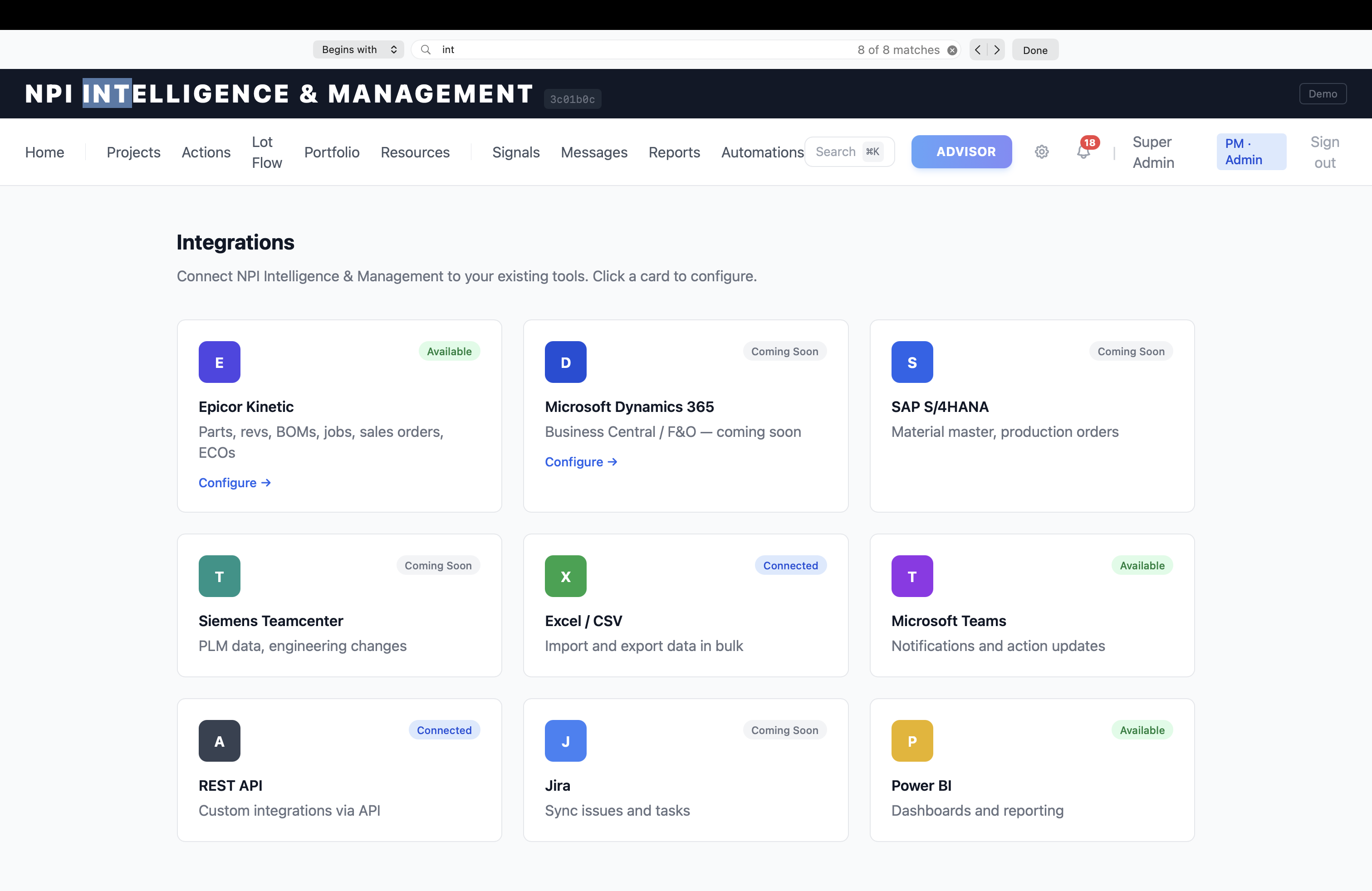
Your ERP runs the transactions. Your CAD/PLM holds the design. BlackOrbit runs the program between them, alongside both. CE marking and UL remain your obligations — BlackOrbit coordinates the work and keeps the evidence trail.

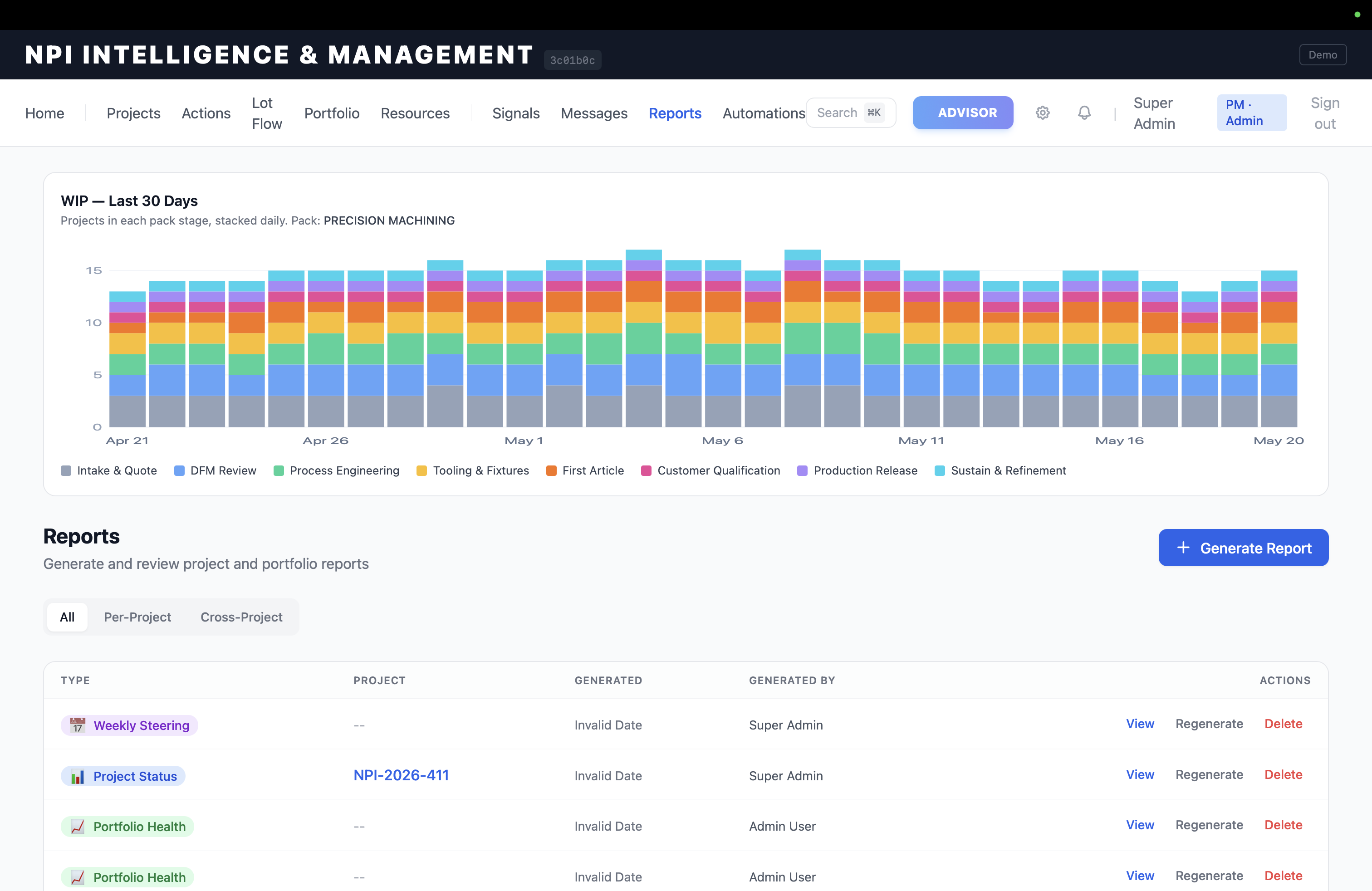
A coordination platform for machine programs with an agentic engine built in.
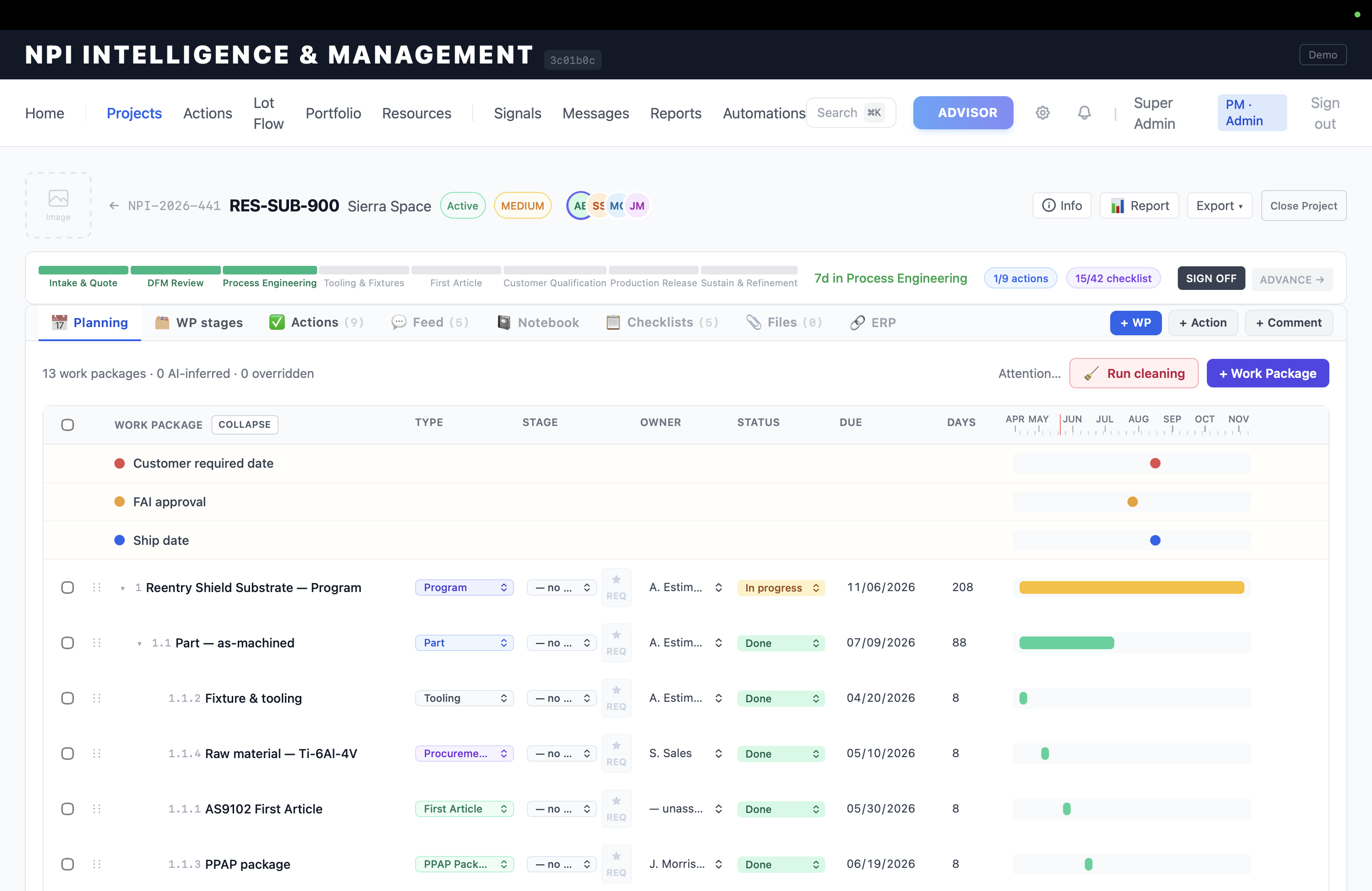
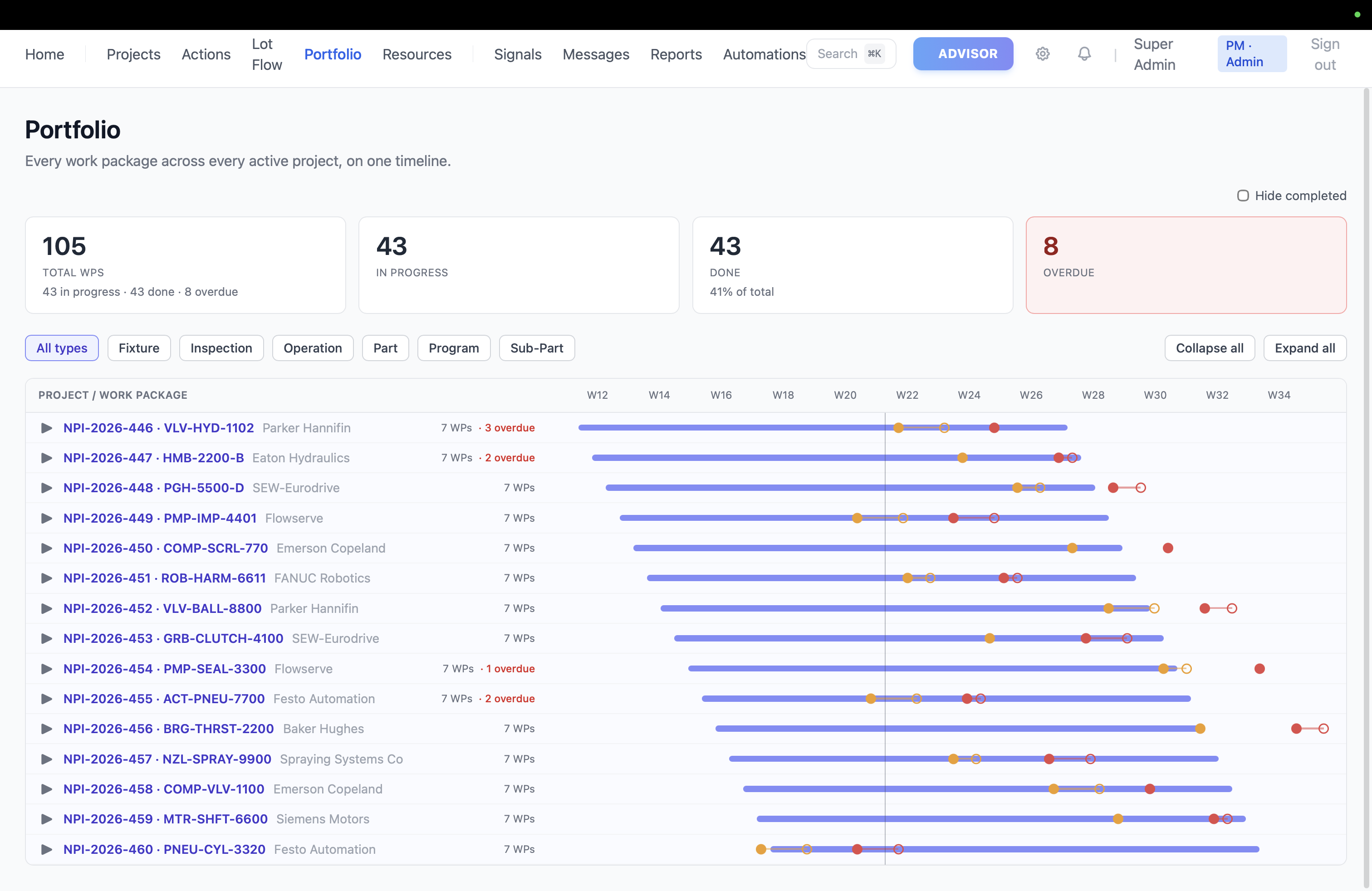
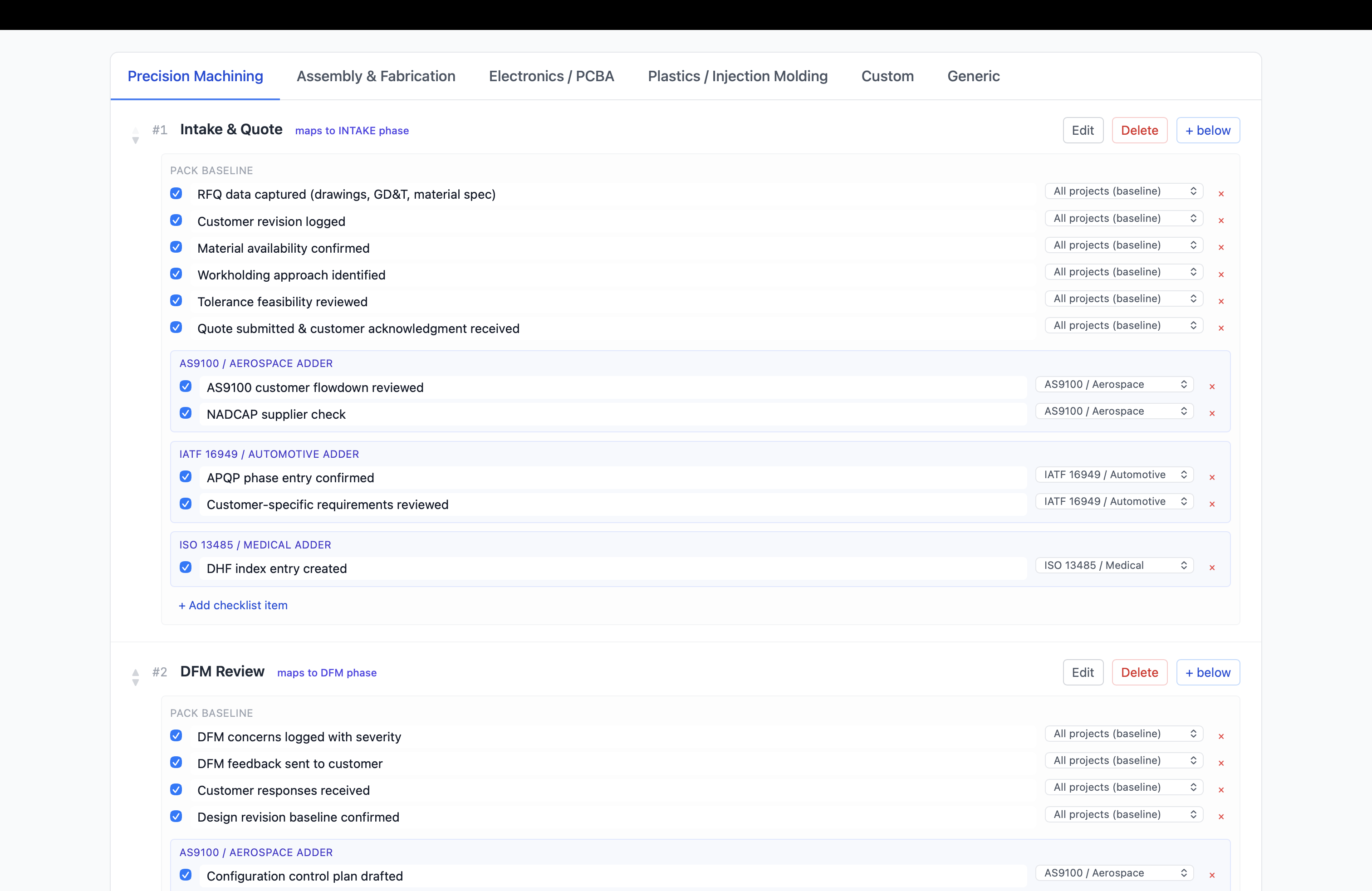
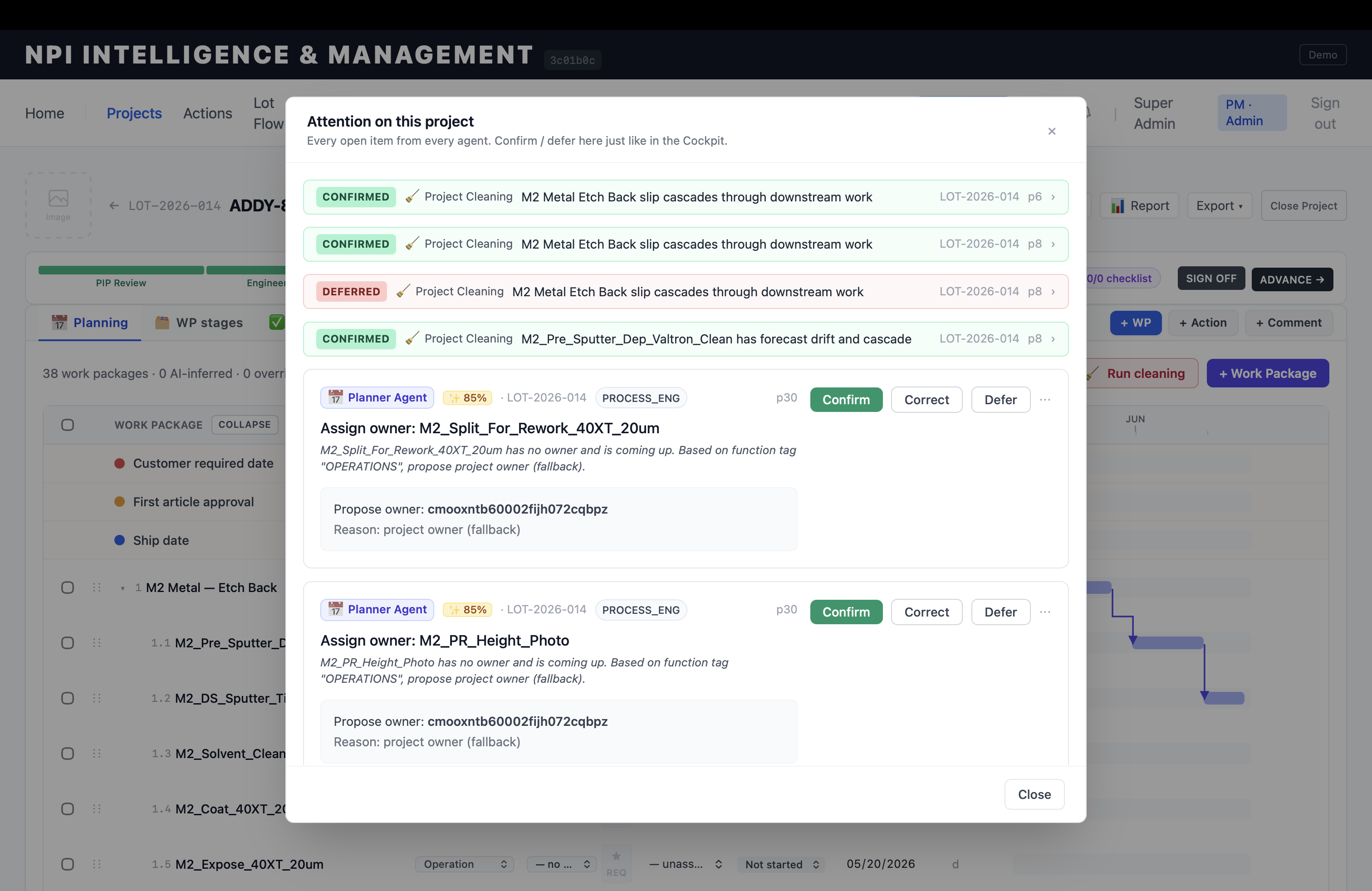
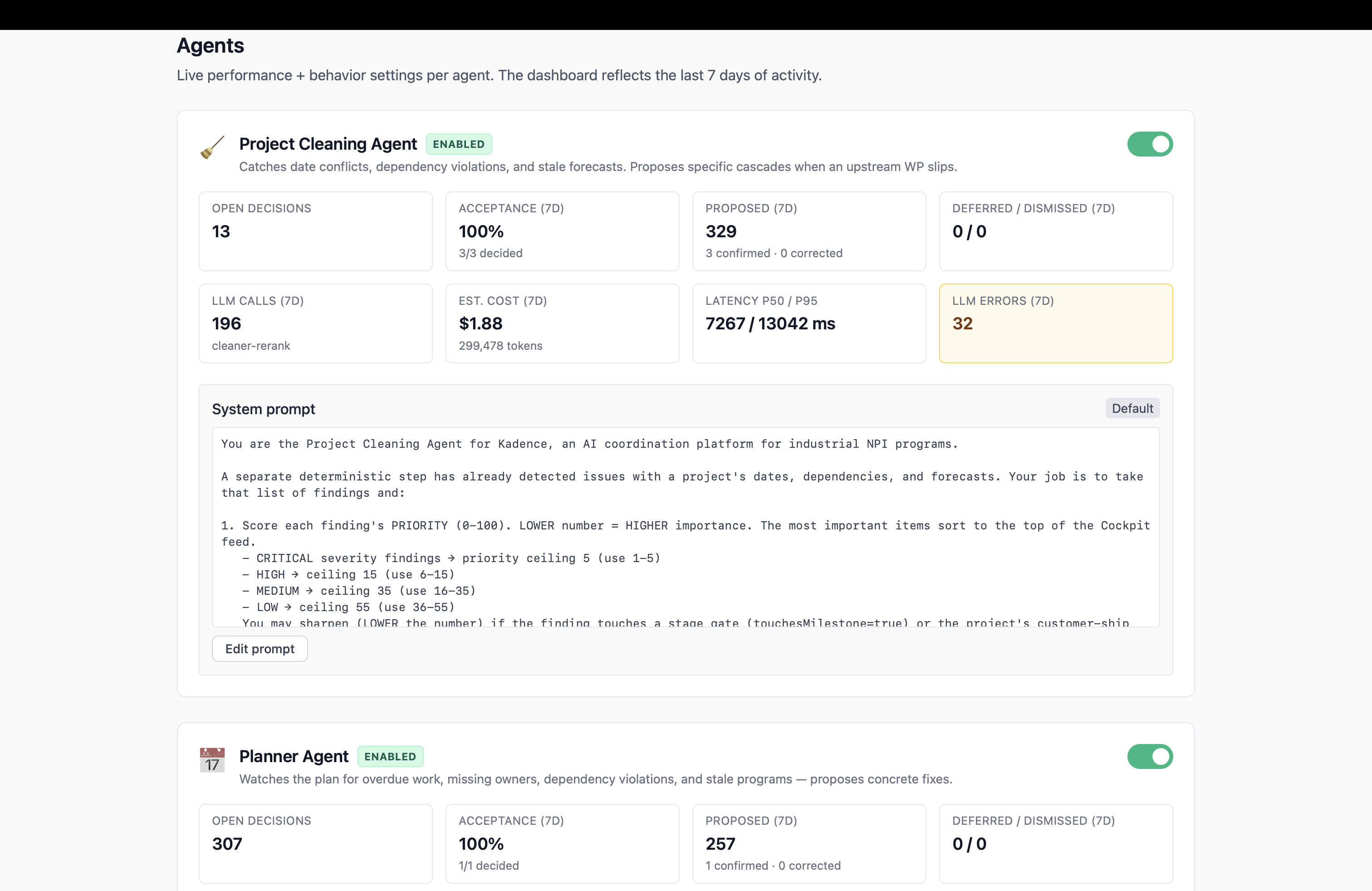
Inside a BlackOrbit program: work packages, owners, dates, and gates

From scattered files to coordinated programs in one day.

Most manufacturing ERPs take 12 to 24 months to deploy. PLM rollouts run 6 to 18 months. BlackOrbit runs your first program the same day you upload it.

01
Hour 1 · magic import

Upload the mess. BlackOrbit structures it.

Your PM drops in whatever the program lives on today — Excel trackers, machine specs, URS documents, punch lists, supplier quotes, PDFs, meeting notes. BlackOrbit parses it all into a structured program: work packages, owners, dependencies, dates, gate reviews. No manual re-entry. No rigid template.

02
Same-day afternoon · team goes live

Invite contributors. They see what matters.

Engineering, operations, supply chain, quality — each one lands on their own actions, deadlines, and gate reviews, with the Advisor surfacing risks and what needs attention. One workspace, one source of truth, no "onboarding week" before anyone can do real work.

03
Week 2+, at your pace · signals online

Plug in the data sources. The loop closes.

Connect inboxes, shared folders, and integrations (ERP, PLM, CAD) at your pace. The engine starts turning supplier emails, PDF replies, and ERP deltas into proposed changes in the Cockpit — with provenance on every one. Your program state stays current without anyone copy-pasting.

Outcomes your team feels in the first days.

−60%
Fewer coordination meetings

Status updates, alignment calls, "quick syncs" collapse when every owner, blocker, and decision lives in one shared view.

PM efficiency

Program managers double their effective output. Less status chasing. More decisions made, more risks anticipated.

−40%
FAT-readiness loop time

The FAT-readiness loop that used to take a week now closes in days. The Planner surfaces impact; the Drafter prepares the comms.

+1
Program in flight per PM

The leverage compounds. Your strongest PMs run an extra concurrent program without burning out.

The math if you run 6 machine builds.

Deliberately conservative numbers. Run yours on the design partner call.

~2,100 hrs
Team time reclaimed per year
7 people × 3 hrs/week of coordination tax × 50 weeks × 6 programs × 1/3 capture. Deliberately conservative against the Cross / HBR collaborative-overload benchmark. The tax hits the whole team, not just the PM.
~$178K
Annual value of that time
2,100 hrs × $85/hr blended loaded cost. Reinvested into FAT prep, supplier follow-up, commissioning planning — the skilled work the team was hired for.
~$220K
Slip and issues avoided
The all-in cost of a single slipped milestone or major quality escape, by the time it's resolved: premium freight, overtime recovery, customer penalties, rework, and re-inspection. Your number varies by contract terms and program value. We'll build yours on the call.
Annual upside, one machine builder, 6 programs
~$400K / year of recaptured value

The gap every other category leaves open.

The machine-builder software landscape is split: heavy incumbents, generic work tools, or narrow shop-floor apps. BlackOrbit is the layer none of them cover.

Capability Manufacturing ERP Generic PM PLM MES BlackOrbit
Full project management actions, owners, threads, cross-functional ~ ~ ×
Project & resource planning Gantt, WBS, dependencies, critical path ~ ~ ×
Stage-gate sign-offs design freeze, FAT / SAT readiness, custom + full traceability ~ × ~ ~
Agentic engine — project administration removes ~80% of project admin × × × ×
Agentic engine — inbound & outbound comms emails & PDFs in; customer / supplier drafts out × × × ×
Portfolio-level risk & NPI advisor cycle-time, bottlenecks, predictions ~ × × ×
Manufacturing ontology, native + customizable machine hierarchies, work packages, multi-discipline BOM, FAT / SAT, punch lists — built in, tunable to your shop ~ ~ ~
1-day go-live with magic import Excel, PDF, SOW → structured program × ~ × ×
ETO change management customer change orders cascaded across mechanical, electrical, and software ~ × ~ ×
Industrial deployment integrates with ERP / PLM / CAD ~ ~

Shape v1 with us. Gain an unfair edge on every machine you ship.

3 spots open · Industrial machines design partner cohort
Still have questions? Read the FAQ ↓

Tell us about your programs

Step 1 of 2
Please enter your name.
Please use a valid work email (no gmail/yahoo).
Please enter your company.

Typical reply: < 48 hrs · Step one is a 30-min NDA call · We read every submission

Please enter your role.
Please pick one.
Please pick one.
Please pick one.
Helps us understand your build model.
A sentence or two is enough — this is how we prioritize.

Application received.

We read every submission ourselves. If there's a fit, you'll hear from a founder within 48 hours with two time slots for an intro call.

What you get as a design partner
  • Direct influence over v1 roadmap and the data model
  • Dedicated engineering pair embedded with your program team
  • Locked-in founder pricing — substantially below list for your first two years
  • 30-minute intro call, NDA-backed — you walk away with a coordination teardown either way

Answers for machine-builder operations leaders.

Every machine we build is different — does a template-based tool fit?
There is no rigid template. Magic import structures whatever the program lives on today — Excel trackers, machine specs, URS documents, punch lists — into work packages, owners, dependencies, and gates. Full engineer-to-order, configured-to-order, or standard machines with options: the structure comes from your program, not from a form.
How does BlackOrbit handle customer change orders?
A change request lands and the Planner computes the cascade across the program graph before you commit: which mechanical, electrical, and software work packages it touches, which gates move, which long-lead orders are affected, which dates shift. You see the full impact first, then decide — and the Drafter prepares the customer response.
We already run ERP and CAD/PLM — where does BlackOrbit fit?
Alongside them. ERP and PLM stay your systems of record — transactions, BOMs, revisions. BlackOrbit owns the program coordination between them: who is blocked, what changed, which supplier has not responded — from order accepted to site acceptance.
Can BlackOrbit coordinate our suppliers too?
Yes. Supplier emails, order confirmations, and quoted lead times become structured proposed updates with provenance on every claim. When a long-lead supplier slips or goes quiet, the program state reflects it the same day — and the Drafter has a follow-up ready for you to send.
How quickly can we get live?
Once your environment is provisioned, a program is live in one day. Upload whatever your program lives on today — Excel trackers, machine specs, action lists, PDFs — and we parse it into a structured program. Contributors are landed by end of day; connectors plug in at your pace.
Do the agents change our data automatically?
No. Every agent action lands in the Cockpit for a human to confirm, correct, or defer. Nothing mutates your plan, sends an email, or updates a status without an explicit click. The agents propose; the human decides.
What does the engine learn about our shop?
Your gate definitions, supplier lead-time behavior, change-order patterns, and your shop's vocabulary on FAT, punch lists, and commissioning. Over time the proposed actions look more and more like what your senior PM would have written.